Rethinking Healthcare: Dr. Leroy Hood on P4 Medicine, Systems Biology, AI & the Phenome


What if healthcare focused on keeping us healthy instead of waiting for us to become sick?
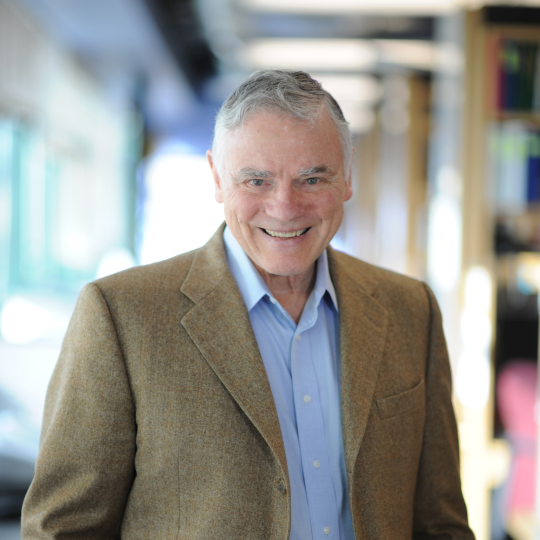
In this episode, I sit down with Dr. Leroy Hood—a pioneering biologist, co-founder of the Institute for Systems Biology, and one of the visionaries behind modern genomics—to explore how science is transforming the future of medicine.
We discuss the origins of systems biology, the evolution of Predictive, Preventive, Personalized, and Participatory (P4) medicine, and why understanding the human phenome may be just as important as understanding the genome. Dr. Hood also shares his vision for Phenome Health, the role of artificial intelligence in healthcare, the future of aging, and how understanding our biology may reshape what it means to be human.
Whether you're interested in medicine, biotechnology, artificial intelligence, or the future of human health, this conversation offers a thought-provoking look at where healthcare is headed next.
Isha: [00:00:00] Welcome back to Info Point. This is the first episode of a new season exploring the future of medicine, the frontiers of science, and what it means to be human. Today's episode takes us into the world of data-driven health, a wave of innovation that's transforming medicine and shifting the focus from treating disease to preventing it
My guest today is Dr. Leroy Hood, one of the most influential figures in modern biology and medicine, whose work has helped redefine how we understand ourselves biologically. He earned his MD from Johns Hopkins University School of Medicine and his PhD in biochemistry from Caltech, and has spent the last five decades building the tools and the ideas that are reshaping how we think about health
He's a recipient of the National Medal of Science and one of only a handful of scientists ever elected to all three [00:01:00] US National Academies, Sciences, Engineering, and Medicine. Today, he's the founder and CEO of Phenome Health, named for the phenome, the complete set of physical and biochemical traits of an organism, tissue, or cell shaped by both genetics and environment.
There, he's exploring a future where data-driven insight helps people stay healthier for longer and fundamentally reshapes the relationship between humans and healthcare
We'll follow Dr. Hood's path from a young Caltech professor building the first tools to sequence DNA, through founding the Institute for Systems Biology, to the framework that would define the rest of his career: P4 Medicine. From there, we'll get into where that thinking has taken him since. A new drug company aimed at treating disease at its root and how he sees AI transforming medicine [00:02:00] from helping doctors make sense of enormous amounts of personal health data to designing the drugs of the future.
Let's get into it.
Can you take us back to the moment when you realized biology needed a new framework, and what inspired you to develop what would become systems biology?
Dr. Leroy Hood: Well, those are, two big questions. So, I would say the major turning point in my career occurred in 1970 when I went to Caltech as a young assistant professor, and for the first time created a lab.
And the real question was, "What are you going to do for the rest of your career?" I had come into that doing molecular immunology, and it had been very successful in solving a lot of the major complexities of how the immune system works, how antibodies work, and T-cell receptors work. [00:03:00] But in thinking about, , human complexity, which has, uh, had fascinated me in various ways all of my life, I realized that in, one, in order to be able to deal with complexity, you had to have a lot of data, because you have to sort out what's happening and everything.
And at that time, there were no instruments for sorting out, generating data, and sorting out complexity. And I realized, too, that, even if you could generate lots and lots of data on individual human beings, there was no way to analyze that data that made a lot of sense, and that was the thinking that led, uh, later to, , systems biology.
So, I set off in 1970 on a, a career arc, and I, I'll describe it for you and everything, that, started with me, acquiring in my lab a whole [00:04:00] series of interdomain experts at the postdoctoral and senior science level, so we could begin to make instruments that would let us generate the data to decipher complexity.
And over the next 20 years or so, we developed a series of instruments that let you sequence and synthesize DNA and proteins. So, they were instruments that really were transformational in lots of different ways. And of course, one of the most important ones-- So in a sense, this was the first big change.
That is, we really introduced technology into biology in a way it had never seen it before. And in fact, there was controversy at, at the division of biology at Caltech over that, because senior faculty at Caltech in that [00:05:00] department didn't like the idea of- A, having engineering kind of things in biology, and B, having-- I had a relatively large lab when we were actively pursuing all four of those instruments simultaneously And, um, but one of them, the automated DNA sequencer, got me invited to the first official meeting ever held on the Human Genome Project in the spring of 1985 at Santa Cruz.
And there were 12 of us that were invited to go and pass judgment on whether the human genome was a good idea or a bad idea. And, to, to summarize a lot of discussion, we came to two interesting conclusions. One was, it was difficult, though, with the DNA sequencer we had just invented. It was, clear to see that you could do it, and, uh, but You had to make the instrument faster and all [00:06:00] those things.
And number two, we were split on the idea of whether it was good or not, six to six, because half the people felt big science would swoop away all the money from small science, and it would destroy the kind of biology we'd been doing in the past. So, when I went out into the community in the, uh, '86 and '87, I would say 80 to 90% of the individuals, the scientists, biologists, were against the Human Genome Project, and NIH was against it, too.
They argued that they were doing all the things that were necessary to solve complexity, and they didn't need this new, big, expensive kind of program. And it was the Department of Energy, ironically, that really led the whole charge for the first five years or so of the Human Genome Project. And in [00:07:00] fact, it was with several representatives from DOE.
We went to Senator Domenici in New Mexico, a state that had two very - large national labs, and it was figured they'd - could play an important role in the Human Genome Project. So, he made the suggestion, "Look, I'll put three billion extra dollars in the budget when we start this program for the future, so you can argue rather than taking money away from small science, you're bringing an enormous amount of new money into biology."
And that was one of the things that worked, and gradually a program started, and then the project finished in 2003 with the sequence of the first complete individuals and so forth. And of course, from my point of view, I think One of the interesting things that the human genome [00:08:00] did for us, I mean, on the one hand, it transformed many areas of biology and evolution and all sorts of things.
But on the other hand, if you thought of it in terms of individuals, it set the upper and lower bounds for what our health trajectory could be, and that really was an interesting idea that intrigued me. Then it became obvious that this cross-disciplinarity that I'd built into my lab was an extremely powerful tool for pushing forward technology.
So, I went to the president at Caltech at the time and suggested I create a, an applied department of cross-disciplinary biology, where each of the different professors would bring a different expertise, uh, chemistry and engineering and computer science and mathematics, and we even had some people in [00:09:00] astrophysics.
And so, what was interesting is everybody at Caltech loved this idea except the biologists, and they vetoed it. And ironically now, gosh, that's, 55 years ago, just four or five years ago, they've done exactly what I proposed in bringing in a part of applied chemistry. So anyway, but Bill Gates made it possible for me to, move to the University of Washington Medical School and set up the first cross-disciplinary department, and that department did absolutely a spectacular job once we put together the cross-disciplinary set of scientists and engineers, in that one, one of them, Phil Green, wrote the two key pieces of software for the entire - genome project.
A second thing we did is two of our colleagues [00:10:00] really pioneered the whole field of proteomics,
and then three, we invented the inkjet technology, which gave you the ability to sequence very rapidly DNA fragments of reasonable size and everything,
but the department at the University of Washington really accomplished its major goal. But the secondary goal that I had was to build systems biology there. In a big bureaucratic organization like the University of Washington, it was just difficult to do things that were really different from ways things were done in the past.
And I remember one example of telling the head of computing at the university, "Gee, I really need a lot of computing power to do the kind of things we're gonna do with systems biology." And he said-- uh, pointed to a janitor's closet and said, "That's all the room any [00:11:00] biologist would ever need. They'll never have much in the way of computational problems."
And, you know, it was that attitude which in 2000 convinced me I should resign from the University of Washington and start the first Institute for Systems Biology. And in 2000, and it's still going today very actively, it's pioneered the whole field of systems biology. And, we looked at first two examples of a, a biology example. That is, how you utilize galactose in yeast, and we convert it into dynamic networks and came to understand the biology and physiology of yeast energy handling. And we did exactly the same thing for an inducible neurodegenerative disease called scrapie in mice, where you could induce it in over 24 m- [00:12:00] months, it went to a clinically diagnosable disease.
Dr. Leroy Hood: So we knew systems biology was going to be very powerful way to approach the study of disease and so forth and then in the early 2000s, I started thinking beyond systems biology and asking the question, what should healthcare be in the future for human beings? And we proposed the idea it should be P4.
It should be predictive, preventive, personalized, and participatory. ,
Isha: In this vision of P4 medicine, which aspects have progressed faster than you expected, and which remain the biggest challenges?
Dr. Leroy Hood: the first three Ps, prediction, prevention, and personalization, are what became data-driven health, and we know how to do that now, as you'll see in a few moments. But the fourth one, how do you persuade people to do what's good for their [00:13:00] own health, and how do you convince doctors to start doing new things to im- help their patients?
That's, something that will require education and psychology and sociology and, , economics to convince people a better way to do health in the future is going to save enormous amounts of money. So anyway, after P4 - there was a bit of a hiatus in things because the P4 concept gave us all sorts of new ideas about new technologies and new strategies for doing biology, and we kept getting grants turned down from NIH because although that was forward-thinking, they didn't have proof of principle.
And of course, you know, experiments are done to prove new principles. And so what I was fortunate is in going to, um, the Secretary of [00:14:00] Economy for the State of Luxembourg, , and this was around 2005, 2006, and persuading them that we would build them a systems biology or a biomedicine institute, and we did, and it became one of the outstanding institutes in the EU for doing systems medicine.
And then, six or seven years later in '14 we had the tools to persuade 108 of my friends to actually do genome analyses and phenome analyses at three times over a period of a year.
And the results that we got back enabled us for each individual to generate actionable possibilities that if they carried them out, would improve their health or let them avoid disease, . And then finally, it was a really spectacular result we got, so we started a company called Arivale [00:15:00] that was a scientific wellness company in 2015, and that ran for a period of four years and acquired, um, 5,000 patients, and we sampled them twice a year or so.
And with coaches to encourage the actionable possibilities, it was very successful from the point of view of improving health and everything. And it was an enormous disappointment when, for other reasons, we had to shut it down in 2019. But what it had given us is a database now of information about 5,000 individuals ranging in age from 21 to 93, and we were able to essentially view the entire longevity of human life in normal people and in some people with disease and see how they did and how, how it was reflected in...
So the genome plus phenome [00:16:00] data, I'll call omics, so how it was reflected in this, omic data. And we've probably published way more than 25 papers from that data set, and the number of papers you can get from a set like that's infinite. It's all a function of your imagination and the kind of questions you ask.
But they, they gave us really a clear view, and - they were a proof of principle for this idea of data-driven individual health, which is what I'm pushing now The next big venture was an interesting one because in 2016, I was asked to become a vice president and chief science officer at Providence, a big healthcare system with 51 hospitals in seven different Western states and everything, with the request I bring both genomics and scientific wellness, [00:17:00] the actionable possibilities that we'd learned about at Arivale.
And I was in the system for four years or so and realized that it was going to be impossible to get much done in a big bureaucratic system. And it, it made me realize that most of the recent systems that operate with healthcare are utterly embedded in the past and the present, and it's going to be very difficult to change them to anything fundamentally new.
So in 2001, I resigned from Providence and then went to initiate a nonprofit called Phenome Health, and I'm at ISB and at Phenome Health, and actually at the Buck Institute in Marin County for aging, trying to put together all of these different kinds of things right now. But Phenome Health is really extended way [00:18:00] beyond what Arivale did, the idea of data-driven health with new strategies and new technologies and new types of data we can use to interrogate human complexity, and the ability to create partners to use these things.
And we're calling this kind of an intelligence layer we have for individual medicine. And the idea of-- is that Phenome Health can bring it to any of the groups that are interested in applying these new principles to the health of their cohorts, be they, uh, whatever they could be, insurance or healthcare systems or, or new kinds of systems.
And what came out as a result of this is, I think we're at an enormous tipping point for this view of health now. And the North Star that I'm really pushing for now is the Human Phenome [00:19:00] Initiative, which will be a continuous carry-on from the Human Genome Initiative, where we look at a million individuals over a 10-year period using all of the approaches that we've developed, and it will have a twofold objective.
One is to show that for each of the million people, by returning their own data in actionable possibilities, we improve their health enormously. And then number two, by taking their de-identified data and inventing the distant future of health as well, so we can put those together So, the final step in this, uh, evolutionary path of my arc of deciphering human complexity was the creation of a new drug company called P4 Bios, which makes peptide drugs.
Isha: So you're translating [00:20:00] this data-driven health into drug discovery?
Dr. Leroy Hood: Yeah, and peptides, and we can make them using the inkjet technology. We can make a million different drugs or 10 million different genes for drugs very easily, and we can put those genes into a lentivirus, and we can use them to infect human cells at the rate of one drug a, a cell. And then we can do something that's called phenotypic selection.
Suppose you have a lot of human cells, a million human cells with a million different drugs in them and suppose you infect them with COVID-19 and just let the cells that are going to survive that infection grow out. You know the living cells have drugs in them, genes for drugs that protected the cells, right?
So it means we can sequence the DNA from the surviving cells, [00:21:00] and it'll give us the barcode for the genes that peptide genes that worked And then we have the ability to mutate and optimize them. And the important thing is we can take a million different drugs, and in one experiment, we can find out which are the best.
Or we can take one drug and mutationally make a million different variants of it to optimize it for its precise function and get rid of any side effects. And with those million variants, again, in one experiment, we can find which are the very best. So it, it increases the scale and the range and the specificity of drugs.
And the important thing it's going to do is generate drugs that will let you optimize wellness and/or avoid disease. So it's going to be the first drug company that doesn't deal just with disease but deals with these more [00:22:00] important aspects of human health. I mean, there are really three stages of human health.
One is wellness itself and how we optimize it. The other is when you transition early to chronic disease, can we reverse you? And we have used the drugs to try and do that kind of thing, 'cause we can do the early detection. And then finally, we can make regular drugs. So, I think this is a company that can transform how pharma does drug discovery and bring the prices down and have specificity that has never been dreamed of before.
And the GLP-1 drug is a peptide, and it's an example of kind of things that we can do in the future, for it apparently has the ability to do many different good things, and it has some bad things, but we can, with this variation we've talked about, select the bad things away So that's all put us [00:23:00] at enormous tipping point where we're looking at data-driven health in new ways.
And what Genome Health is building is what we call an intelligence layer, where we can deliver all the lessons we've learned to partners out there and help them in their various health tasks. So for example, for the Human Genome Project, we'd like to recruit nations from across the spectrum, from the EU, and from Asia, and so forth, and we're talking with three or four countries now about bringing cohorts into this million-person project we've talked about.
And the idea that from different areas of the world, we can bring in cohorts that have all of the genomic complexity of the entire human evolutionary [00:24:00] tree means that in the future we're going to be able to treat superbly populations such as we have in the United States, which are hybrid individuals, mixtures from, uh, many different races and things like that.
And we can, A, identify which races the segments of their chromosomes come from, and, and B, come to understand the implications for health those different segments have. So anyway, this North Star of the Human Genome Project will do One, it will prove, uh, powerfully that you can make a million individuals healthier, plus or minus,
And number two, we'll be able to-- We're estimating we'll get 200,000 transitions from wellness to disease, and so what we'll be able to do with the peptide drug company is work on very early transitions to find drugs that can help [00:25:00] us then return that perturbed disease network back to normal before it ever becomes a clinical disease.
And since chronic diseases cost 86% of our healthcare budget, which is, uh, five and a half trillion dollars, you could-- If you started avoiding major chronic diseases, which we think we could do in five to 10 years, that means you could think about trillion dollar savings in healthcare that could be used for health rather than for disease care, which is what the system we have is, is today.
So, a- anyway, a third thing is we're developing all sorts of new technologies that will make things less expensive, and you'll be able to do many of the measurements at home, so it'll democratize the ability to do genome and, and phenome kind of work and everything And then [00:26:00] finally, we're gonna develop new areas of data exploration, and they're really important because the human being, with the measurements we can make now, has many black holes, and especially the - brain has a lot of black holes where we just can't draw anything about its con- its conclusions with regard to complexity.
And of course, with new types of data, we'll be able to do that, and use AI very effectively to organize and classify and, and actual delivery actionable possibilities in an appropriate way to patients and their physicians. So, in this arc that we've talked about here, I think, the, major point to make is that we're at a point where there's gonna be an enormous revolution in how we can do healthcare.
And we're gonna focus mostly on creating new [00:27:00] organizations that adopt this idea of, of healthcare being focused on wellness and prevention rather than on disease as it is now. And we think that constellation of companies will grow powerfully in time, again, with those we recruit from abroad and everything, uh, that'll will come to replace the old disease care system.
So I d- I think we'll have a healthcare which in the future will integrate together the ability to look at literally millions of genomes and millions of phenomes.
And let me say, I should've defined genome and phenome a little more clearly in the past. The genome, of course, is the sequence of the DNA and all your chromosomes, and it, as I said, governs the upper and lower limits of what you can do. Whereas the phenome is actually how [00:28:00] you actually wander between those two limits, and the really key part about the phenome is there are two things that control that phenome.
Mostly your behavior, your, with regard to diet and exercise, and all of the classic things. And the second is your environment. Are you exposed to toxins and noxious gases, and forest fire exposure, and, uh, smoke exposure, all of those kind of things. So, and we can measure those phenomic things by looking at your blood analytes.
We use systems biology to think about this. In the sense, blood is the ideal system for studying human health and disease because it bathes all of your organs, and they secrete molecules into your blood. So from the blood, we can capture these - molecules, and we can identify subsets of them that are specific for various [00:29:00] organs.
So changes in their concentration levels reflect changes in the state of the organ. That is, it gets healthier or gets cancer, and we can begin to read all of those kind of things now with this systems biology approach to all these data. So we now have, what's really exciting, is an enormous scientific wellness data lake which has, A, , a lot of the data, and in the future, links to data that will be associated with.
B, it has the ability to translate those data into actionable possibilities, and into dynamic, , biological networks that underpin physiology and disease And then three, we'll have the possibility in the future from looking at each individual's genome and phenome analysis to find outliers [00:30:00] that you can put into this data lake, and that will take you to all of the known published information, because we, we've integrated 18 knowledge graphs tying all of public information on biology and medicine into these databases.
So it gives you the enormous ability for each individual to find out what the optimal set of actionable possibilities are, and then using AI to deliver those to physicians and patients. And of course, what AI in this regard is going to do is make every single physician a domain expert in very broad fields of medicine and give, uh, him or her the ability to treat their patients as they've never been able to do in the past.
So we'll integrate together genomes and phenomes through AI to the big data lake, and we'll bring in the [00:31:00] peptide drugs that are going to be the drugs of wellness, of prevention, and of disease in the future. So that's kind of the track that, uh, I've taken in 55 years or so, whatever it's been since 1970.
Isha: Wow, you've had such an amazing career arc from the transformative sequencing technologies to phenome health and now this peptide technology. It's truly amazing, and it's amazing how changing the questions that we ask can give us so much more insight into what we're studying. Moving away from this, reductionist perspective has taught us so much as you've seen throughout your career.
Dr. Leroy Hood: . Yeah, and systems biology applies to every discipline you can think about. For example, one of the things I set up at ISB is a wonderful K through 12 educational program, and initially it was, uh, [00:32:00] really focused on hands-on inquiry-based science and teaching kids to think and learn about science.
And what we're doing now is just starting a program where we're going to teach kids how to use AI to learn and transform their ability to learn and transform their ability to, to understand the world and appreciate the incredible beauty and complicated nature of it and all of those other things. And we think this whole idea of bringing to the younger generation the vision of data-driven health, which we'll do in this program with the AI and, and the use of a tool that's going to be one of the most transformational aspects of education ever, if it's used in the right way, and we're gonna teach kids to use it the right way
Isha: Wow.
I mean, it's really nice to [00:33:00] engage the future generations. I feel like traditional school systems, we, when it, AI first came out, were kind of hesitant to even, allow students to use it. So it's crazy how much things have changed. Yeah.
Dr. Leroy Hood: Yeah I think, I think we can change that completely.
Isha: Yeah. So many major medical health initiatives, as you've said, have focused on understanding disease.
Phenome health is different in the regard where it focuses on understanding health itself. Why do you think in the past, and historically, the medicine field in general has neglected the study of wellness?
Dr. Leroy Hood: I think it's because health, it was initially assumed that wellness, you don't need anything.
You're just fine. You're okay. Mm-hmm. But if you get sick, we've gotta treat you. So I think from the beginning, the whole system was on dealing with disease. And, you know, the big things were [00:34:00] making your environment less toxic, and getting healthy water, and healthy food, and things.
I mean, in, i- in the turn of the century, uh, two or three k- kids out of 10 would be dead because of infectious disease by the time they were five years old. So they solved the big infectious disease problem and so forth, and vaccines, to a sense had in the past solved a lot of the potential infectious disease things.
We're having a lot of trouble with the current government in that regard. But anyway, in the end when all is said and done, they'll be so proven to be wrong that it'll reverse and be just fine. And they're already been proven to be wrong. The Army, uh, recruits, that they wouldn't have get infected now, in Florida had a big [00:35:00] infection, and lots of people got sick.
They reversed that decision, even though the policy of the government is no vaccines. I mean, it's, it's really silly. But the, I think what has happened since the arc I've talked about, is that we've realized that wellness is really something you can optimize enormously, and the arguments for optimizing normal for each individual are that it lets you realize your potential and use all of the skills, and talents, and energy, and focus you have to do whatever you want to do And the second thing it's going to do that's really gonna be transformational is will expand your health span so that you can really expect to live into your 90s and still be mentally agile and physically capable and everything.[00:36:00]
And what that does for society is it allows people to use the wisdom they've accumulated over a lifetime and give it back to society as they can function effectively into their 90s or beyond. And that's really important these days because all developed societies are not reproducing the proper number of people to keep their society balanced, and it means if you can have a significant improvement in extending from a retirement age of whatever it is, 65 or so, if you can say, "We'll be functional out to 90", what a change on the workforce and what a a country can realize and everything.
So it is a responsibility of every country to adopt this in their responsibility to make their citizens as productively, as productive as they can. [00:37:00]
Isha: Wow, it sounds like we're moving from a more reactive model of healthcare to a proactive one, which is really nice,
Dr. Leroy Hood: it is, absolutely. I mean, the way to think about it is, in a sense, you're the navigator of your own health.
Isha: Mm-hmm.
Dr. Leroy Hood: And it's, it's like being a conductor. I mean, in a sense, the genome has written a wonderful, beautiful piece of music, right?
And then the conductor can take that music, and he can creatively put it together in many, many different ways.
And your genome has given you this software for life development, and your phenome is what you direct to optimize all the things you can to get the best.
Isha: When you mentioned aging as we gain the ability to measure and predict health in a lot of detail, do you think that aging will increasingly be viewed as a manageable [00:38:00] biological process rather than an unavoidable decline?
Dr. Leroy Hood: Well, I think less and less will we think about aging, more and more we'll think about health into the 90s, you know?
It's all about, it's all about optimizing our individual potentials for as long as we can.
Dr. Leroy Hood: I'm convinced with the new techniques that are emerging and, and actually joining of different approaches, you can join together geroscience, which is the study of aging, with the scientific wellness that I've talked about here.
And if you put them together, you get striking new additional understandings of how to optimize that wellness business. So putting these things together is, it's going to be a different world for us.
Isha: We're adding life to the years that we have.
Dr. Leroy Hood: Many years , but not just years, it's functional years. See, the ideal is to have [00:39:00] you go up to 95 or 100 or however long you're gonna live, be fully functional to almost the end, and then suddenly you will get a systems failure. , Old people, when they have any difficulty, often die very, very suddenly because your body just kind of wears out and has less flexible defenses.
So, so my feeling is for most of us, we'll be able to go out to close to the very end and be functional right up to the end. So what an exciting idea.
We don't have to have relatives that have to take care of us for five years or 10 years and spend money and do all these things. And the caretaker being taken care of scenario will start to end.
And think about the most tragic examples are Alzheimer's, for example. Where if a person's husband gets Alzheimer's in his late 50s, uh, he can live for [00:40:00] 10 or 15 years, but - that paralyzes that person as a caretaker, and enormous resources are required, and we're going to change all that.
Isha: Yeah. On the note of that, how has systems biology changed the way that we think about complex diseases like Alzheimer's and cancer, and what insights have emerged that maybe traditional approaches have missed?
Dr. Leroy Hood: Well, I would say there, there are two things that have come out that are really important for disease.
One, we can use the omic analysis of disease to understand, in enormous detail now, its molecular underpinnings and the dynamics of the disease, and what changes. And we can come to understand, for example, in a disease like diabetes, we can divide individuals into those that have different subtypes of diabetes, and each [00:41:00] subtype has transitions to, uh, aspects of diabetic complications like maculopathy generation or amputation of limbs or those kind of things.
And we'll figure that out, and we'll figure out drugs that, A, can prevent early, and B, can even, if you're in the disease, can start to reverse some of, the worst aspects of the whole thing. But the other thing that we understand that healthcare has utterly failed on up till to date, is that many people, when they get older, have two or three chronic diseases, and the interesting point is, if you treat one, if you treat cancer, for example, you can destroy your immune system, and that can really get you into trouble with diabetes and aspects of cardiovascular, which needs the immune system.
And you know where that's really true is [00:42:00] people who have long COVID have many complicated systems, problems that you have to treat, and treating one may decrease the effectiveness of your treatment of the other. We're using AI now to, um, multi-dimensional optimization of how you can treat these three things together most effectively.
So it's understanding disease is really complicated, and our hospital system today lives in silos, where each silo just specializes in something, and the silos rarely talk effectively to one another. That's all going to change with the systems understanding.
Isha: AI systems have really caught the attention of so many different fields, including biology.
How have the advances in - artificial intelligence changed what is possible now compared to when you first envisioned [00:43:00] systems biology and P4 medicine? What do you think that AI... what role do you think it'll play in the future?
Dr. Leroy Hood: Well, I think the AI is going to play a number of really critical roles in healthcare.
So one, whatever strategy of healthcare you prevent, AI has the ability to optimize enormously its actual practice in complicated organizations. And the hospitals that realize that sooner and employ it, of course, are gonna be the most effective But I think, too, from my point of view, the real power of...
Look, what AI can look at is all the data that we've generated on human complexity, and it can analyze it, and it can optimize it, and can do multidimensional optimization. But what is true, we still have to continue to invent new kinds of data [00:44:00] that are going to open up the black holes of complexity that AI has never seen before.
So as a partnership, we can open those holes, generate new data, and we can give AI the ability to integrate enormous amounts of data in the, the scientific wellness data lake in an optimal way that lets health work really effectively and drugs work really effectively. I mean, one of the things, for example, we'll be able to do in the future with the help of AI is just as we look at the actionable possibilities in all of the data we have on humans, and find that for the individual, when we look at the outliers, we can map precisely the actionable possibilities they need.
So with the peptide drugs, we'll be able to map [00:45:00] those, and we'll find the drugs that are perfect from the individual and with no side effects. And that means, I mean, today's, for example, there was a paper of five, six years ago in Nature that demonstrated for the top 10 selling drugs in the US, it turns out that only 10% of them work on their diseases, and the rest all have side effects and complications.
And those 10 drugs amounted to about a 600 billion spend a year. And suppose we could get precisely the 10% where the drugs worked and take away all those where it didn't work, that would be a half trillion-dollar savings right there in healthcare and it would make people much, much healthier.
And with the diversity of drugs, we'll always be able to find good [00:46:00] drugs for each individual. So, a- and AI is going to be necessary because of this enormous complexity for being able to map the complexity of a human to the complexity of treatments, both lifestyle and drugs, that will optimize their health and take them out to be 99 and healthy and active and productive.
Isha: Yeah, so AI can digest, calculate, compute, analyze this data, but we still need more data to figure out more things.
Dr. Leroy Hood: For example, the brain is one of the biggest black holes. We only understand a few things about the brain that mostly relate to electronic measurements and imaging measurements.
And there have been some recent more molecular measurements, but we have a long, long ways to go. And new types of data are gonna give AI an enormous breadth of, uh, of a view, a deep [00:47:00] view of brain health and disease, and what we can do to optimize the former and minimize the latter.
Isha: As we increasingly come to understand ourselves through so much data, how do you think that this will change what it means to be human?
Dr. Leroy Hood: I think the way it will change what to be human is give us the ability to realize the enormous potential most of us have that comes from superb health, and a long life and, and the blossoming of the creativity, and the drive, and the vision of what you wanna do with your life, and your ability to execute that.
I think it's going to make us much, much better people.
Isha: That sounds amazing. What are some of the biggest obstacles that are preventing P4 medicine from becoming [00:48:00] mainstream, or any obstacles with Phenome Health that you currently have?
Dr. Leroy Hood: I think the biggest obstacles are the current sick care system is - economically and psychologically embedded in sick care, and it's a system whose doctors are mostly busy.
It's a system with what's happening in government now, where many hospitals are having financial difficulties and so forth, and they just don't have the time to think about the future and how transformational it can be, and that's enormously unfortunate. And that's why my view is what we're building here the new kind of healthcare, w- we're not trying to change anything that exists now.
We're building a whole new structure to do it right, that'll be competitive financially and technically and in terms of people's health. [00:49:00] And I think if we're right, in time, the other system, one way or another, will be forced to adapt. I mean, in the evolution of organisms, as environment and things change, you evolve organisms that can adapt to meet the environment, and what often happens is the old ones die off.
And I think a lot of the healthcare system, frankly, is gonna die off as we bring into focus the individual, and wellness, and prevention, as opposed to sick care, and only dealing after w- disease after it's been diagnosed.
Isha: Yeah, so the science can be there, but without the proper policies and implementation, it's hard to move forward.
Dr. Leroy Hood: It's... Well, it's hard to move forward because, I mean, you know, people fundamentally- resist change. Paradigm changes aren't something that comes [00:50:00] easily. There's enormous... For each of the major changes I talked about across that career arc, whether it's bringing technology to biology, or the Genome Project, or this cross-disciplinary vision of how you can do science in a department, or, or systems biology, or P4, or data-driven health that we've talked about here, all of those met, faced, and do face today, some of them, enormous skepticism.
And what was absolutely required to get through that is determined optimism. You had to feel that the trajectory you chose with your career was really going to push forward in the direction you wanted to see. And for many people, why it was necessary to develop technology, for example, back in the '70s and '80s, wasn't obvious at all, or why the Genome Project was gonna be really [00:51:00] important wasn't obvious in the - late '80s and the '90s to most people.
Or today, this data-driven health is something that is practiced by a very, very few physicians and so forth, but in 10 to fif- 10 years, I think it'll be the dominant view, and, and we'll have a rich constellation and ecosystem out there that will be based entirely on the vision of wellness and prevention.
Isha: I'm glad we have optimistic biologists like you who've paved this path and overcome a lot of the hurdles that it takes to get-
Dr. Leroy Hood: Sure.
Isha: Are there any biological measurements that you think that if we had could really optimize or revolutionize healthcare?
Dr. Leroy Hood: Well, I think that question has two answers. One, [00:52:00] a systems view of making measurements of human beings means that you'd like to be able to quantize measurements on all of the major informational molecules, the RNAs of many different types, the proteins, and even the metabolites and lipids and things like that.
- In most cases now we measure just a few of them. We'd like to be able to extend the measurement in a global sense to measure them all, and the technologies are emerging for, uh, being able to do that. A second point is we really want new measurements that explore entirely new dimensions of human complexity and, uh, we have a lot of ways to think about that.
But that is really important because the AI then will integrate all these new dark holes right into the, all the known stuff that we've had before, [00:53:00] and that'll be exciting. And I think the third major possibility is we and many others are working now on the ability to take many phenome measurements and put them in the context of wearables, so you can actually be at home with your Oura Ring or your Apple Watch or Fitbit watch, and you can measure physiology and go way beyond that.
. We hope we can translate the insights of omic analyses of diabetes into these wearables that you can track your diabetes at home really easily with and get early warning signals for crises and so forth. And then I think the fourth thing is to be able to integrate all these data together in the context of this big lake and make the predictions for each individual about how to optimize their health.
So those are what I see. I mean, [00:54:00] extending the level of measurements on the number of proteins that we can make, on the number of , RNAs of various types we can make, on the metabolites and the lipids and so forth, being able to, uh, analyze more effectively the wearables and all of these kind of things integrated all together is what's gonna be key.
Isha: Are there any misconceptions that you think people have about the future of medicine?
Dr. Leroy Hood: Well, . i think one of the biggest set of misconceptions that's pretty wide out there is the threat of AI and taking away our jobs, and it isn't going to be useful, and we should block it. I think that, that would be one of the most disastrous decisions the US as a nation could ever make, I think, and not realizing the
And, and look, any tool you develop has the power to be used really well [00:55:00] and to facilitate a better life and learning and everything, or you can use it a lot of other ways, and you, we just have to learn. Look, you can, uh, you can do a lot of things with a car that aren't healthy, but you learn how to drive it and do the things that facilitate your activity.
So it is with AI.
Isha: Yeah. So it's the user who's in charge.
Dr. Leroy Hood: It's the user. It, and it's really very much going to be the user who's in charge because, if you deny AI and say you won't do anything that involves AI, you've cut your out of, yourself out of data driven health. No question. You can stay with the old sick care and, and you can die at an average age of 79 rather than 98.
Isha: If your vision succeeds, what do you predict that a routine doctor visit might look like in 2050?
Dr. Leroy Hood: Well, I think I think there'd be [00:56:00] wearables that can report into the doctor continuously a lot of your health states. I think the doctor will have an AI device that integrates and analyze those real times, and sets up a red warning if there's something that's bad or transition.
So I think in the future it isn't going to be doctor visits, it's going to be monitoring the major systems effectively, and only going to see a doctor if there's something that needs fixing
Isha: You've spent the majority of your career creating technologies that generate biological information. What biological question still keeps you awake at night?
Dr. Leroy Hood: Oh, I think, I think the biggest question that we all wonder is, how does the brain work? And more specifically, what's the under pinning mechanistic basis for consciousness? I [00:57:00] think those are two enormous questions. And frankly, I don't see any very easy way of answering either of those questions in the near future.
Mm-hmm. So I think that's a big puzzle. I think a lot of other things in the body we're really gonna be able to deal with effectively, but I think th- the brain is ... Look, the brain is our AI, right? And we don't quite understand how our AI, AI works. And and we can't get all the data we need to understand how it works at this point in time.
Isha: It's fascinating how even after decades of discovery, biology still has ways to surprise us.
Dr. Leroy Hood: yep. And it will always be so. That's what's really convincing about a wonderful career in biology. You'll always have, you'll always have those new frontiers you can go off and explore and everything, so.
Isha: Thank you so much, Dr. Hood, for sharing your stories [00:58:00] and insights today. Your dedication to science and your work is incredibly exciting. I really enjoyed our conversation, and it's been fascinating to hear your perspective on many different topics. I look forward to seeing how your vision continues to unfold.